A garage door is one of those systems people tend to ignore until it starts acting up. It opens in the morning, closes at night, and becomes part of the background. In coastal areas, that routine can change sooner than many homeowners expect. Salt air, humidity, and heat do not usually cause a dramatic failure overnight. More often, they work slowly, affecting hardware, movement, and reliability until the door becomes noisy, inconsistent, or difficult to trust.
That matters because a garage door is not a single part. It is a working assembly made up of moving hardware, springs, tracks, a motor if the door is automated, and smaller components such as remotes and controls. In areas where local businesses regularly deal with repairs, servicing, installations, motor replacement, and spring replacement, the pattern is familiar. Coastal conditions place extra stress on the system, and that tends to increase maintenance needs over time.
Coastal air changes the maintenance equation
In a dry inland goldcoastgaragedoorrepair.com.au environment, a garage door may go a long stretch with only basic attention. Near the coast, the conditions are less forgiving. Salt in the air and persistent humidity can affect garage-door hardware, and heat can add another layer of strain. Even if the door itself still looks acceptable from the street, the components doing the real work may be aging faster than expected.
This is one reason local service providers in coastal regions often talk about maintenance as prevention rather than an optional extra. It is not simply about keeping the door quiet. It is about preserving consistent movement, reducing unexpected breakdowns, and extending the life of the door and motor. One Gold Coast business recommends professional servicing every 12 months for exactly that reason.
That annual rhythm makes practical sense. A garage door usually gives small warnings before it quits altogether. The trouble is that those warnings are easy to miss when they build gradually. A door that once moved smoothly may begin to hesitate. The motor may sound like it is working harder. The close cycle may become less predictable. People often adapt to the change without realizing how much performance has slipped.
What salt air tends to do to garage-door hardware
Salt air is hard on exposed metal. In a garage-door system, that matters because the hardware has to do more than just exist, it has to move precisely and repeatedly. A little deterioration in the wrong place can create friction, resistance, or uneven travel.
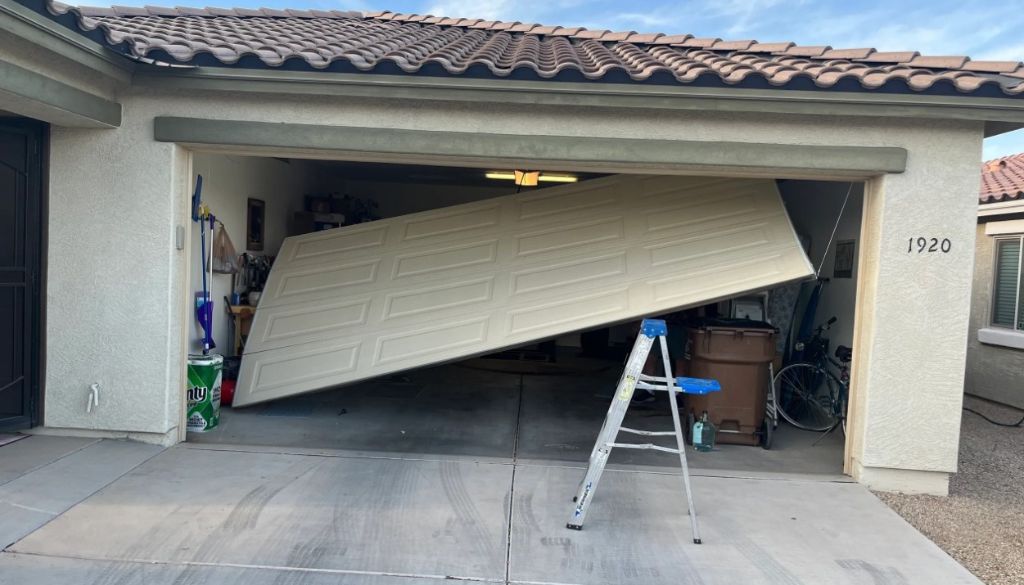
The effect is rarely limited to one dramatic point of failure. Instead, small issues can start stacking up. A component may not move as freely as it once did. The door may no longer feel as balanced or aligned as it should. If the system is automated, the opener may need to work harder to complete each cycle. Over time, that can turn a minor service issue into a larger repair.
This is one of the reasons homeowners often search for terms like garage door opener repair only after the motor begins to struggle. The opener may look like the problem because it is the part making the noise or failing to complete the job. In practice, the motor is sometimes reacting to resistance elsewhere in the system. If the door is dragging, binding, or moving out of true, the opener ends up absorbing some of that strain.
That does not mean every noisy opener is a coastal damage issue, and it does not mean the motor is never the real culprit. It means coastal wear can complicate diagnosis. An experienced technician does not look at the opener in isolation. They consider how the whole door is tracking and whether the hardware is still supporting smooth movement.
Humidity affects performance in quieter ways
Humidity can be less obvious than salt air, but it can be just as important. In a humid climate, moisture lingers. The door system is exposed not only to outdoor air but also to the changing conditions inside the garage itself. That can affect how consistently components operate and how quickly wear becomes noticeable.
The challenge with humidity is that it often exaggerates smaller weaknesses. A door that is already a little out of adjustment may begin to show more symptoms in damp conditions. A system that has gone too long without service may become more temperamental. People sometimes describe this in everyday terms by saying the door has “good days and bad days.” That kind of inconsistency is often a sign that the system needs attention before the problem becomes more serious.
Heat adds to the picture. Coastal service providers specifically note the combined effect of salt air, humidity, and heat. That trio can create conditions where maintenance intervals matter more than they might elsewhere. Even a well-installed door is still a machine with moving parts. Machines last longer when someone catches wear early.
Why alignment becomes a bigger deal near the coast
When people hear the phrase garage door alignment, they often think of a door that looks visibly crooked. Sometimes the issue is subtler than that. Alignment problems can show up in the way the door tracks, the way it seals, or the way it starts and stops. A slightly misbehaving door may still open and close for months, but not as cleanly as it should.
In coastal environments, hardware under extra stress can make those small alignment issues more likely to matter. A door that is not moving cleanly through its path can put uneven load on other components. That affects both manual operation and automatic operation. If the opener has to compensate for misalignment again and again, it can shorten the period between service calls.
A common real-world scenario goes like this: the homeowner notices the remote still works, the motor still runs, but the garage door not closing properly becomes the daily frustration. Maybe it stops short, maybe it seems hesitant, maybe it reverses or leaves the owner checking twice before walking away. At that point, many people assume the fix is electronic because the door has power. Sometimes that is true. Sometimes the actual issue is a door that is no longer moving as freely or as evenly as it needs to.
That is why a proper diagnosis matters. If the door is out of alignment, replacing a remote or focusing only on the opener may not solve the core problem. A coastal garage door often needs a broader look.
Springs deserve special attention
If there is one part of a garage door system that should never be treated casually, it is the springs. Spring replacement is a standard repair service, and for good reason. Springs do the heavy lifting in a way most owners never see. When they wear out or break, the door’s balance changes immediately and the whole system can become unsafe.
Authoritative safety guidance is very clear on this point: garage door springs are under high tension and are dangerous to adjust or repair without proper training and tools. That is not trade language meant to scare people into a service call. It is a safety reality.
In coastal conditions, where hardware may already be under greater environmental stress, spring issues should be taken seriously and addressed professionally. There is another practical point here that homeowners often do not know. When one spring breaks, both springs may need replacement because they usually wear at a similar rate, and mismatched springs can create balance problems. That balance issue matters for performance just as much as it matters for safety. An imbalanced door can affect travel, strain the opener, and lead to uneven operation.
A lot of people search fix garage door when a spring problem appears, especially after hearing a sudden bang from the garage or finding that the door no longer opens as expected. That reaction is understandable. The safer response is to stop using the door and have it assessed by someone trained to deal with spring systems.
The opener often tells the story first
Automated garage doors have changed expectations. When a door is motorized, people expect it to work with the push of a button every single time. That convenience is great when the system is healthy, but it can also mask gradual wear until the opener begins to object.
The opener is often the first part homeowners notice because it is audible and visible. If the motor strains, stalls, or sounds rougher than usual, attention naturally shifts there. In some cases, garage door opener repair is exactly what is needed. Local services in coastal areas regularly handle motor replacement, installations, and automation upgrades for existing doors, which shows how common opener-related work can be.
Still, the opener does not operate in a vacuum. It depends on the rest of the door system moving properly. If the tracks, springs, and hardware are not doing their part, the opener ends up compensating. That is why a failing close cycle or an inconsistent opening cycle should be approached as a system issue first, not just a motor issue.
A technician with good judgment will usually want to know more than “does the motor run?” They will look at whether the door seems balanced, whether movement is smooth, and whether the hardware appears to be coping well with the local environment. That broader view is especially important in humid, salty areas where several minor issues can combine into one noticeable symptom.
Small warning signs that should not be ignored
Most garage doors do not fail without warning. The problem is that the warnings are easy to dismiss because the door still functions, at least some of the time. In coastal conditions, paying attention early can save both money and inconvenience later.
Here are five signs that deserve a closer look:
The door sounds rougher or louder than it used to. The opener appears to struggle during opening or closing. The garage door not closing properly becomes a repeated issue rather than a one-off glitch. The door movement looks uneven, hesitant, or slightly out of track. The system has gone longer than a year without professional servicing in a coastal environment.
None of these signs automatically points to one exact failure. That is the point. Garage doors are interconnected systems, and in areas affected by salt air and humidity, multiple smaller issues can create the same symptom.
Repair, replacement, or upgrade?
Once a garage door starts showing its age, owners often want a simple answer: repair it or replace it. Real life is usually less tidy. The decision depends on what is failing, how often it has needed service, and whether the existing setup still makes sense for the property.
If the problem is isolated, a repair may be the obvious path. Local providers commonly repair and replace components such as motors, remotes, and springs. If the existing door is otherwise in sound condition, targeted work can restore reliable performance.
In other cases, a replacement motor or an automation upgrade may make more sense than repeatedly patching an older setup. That is especially true if the main frustration is convenience and reliability rather than the door structure itself. Coastal wear can turn a previously adequate system into one that feels fussy and inconsistent. Upgrading the automation side can sometimes solve a recurring headache, provided the door itself is still moving properly and safely.
There is also the middle ground, which is where many households land. The owner may not need a whole new door, but they may need more than a quick tweak. A service visit that includes adjustment, component replacement, and a clear assessment of the motor’s condition can be the most sensible route. Good advice in this area is rarely about pushing the biggest job. It is about matching the work to the condition of the full system.
Why annual servicing matters more than people think
People are often diligent about visible maintenance and casual about mechanical maintenance. They wash cars, clear gutters, and repaint timber before it looks too tired. Garage doors get less attention because most of the wear happens in the parts nobody studies day to day.
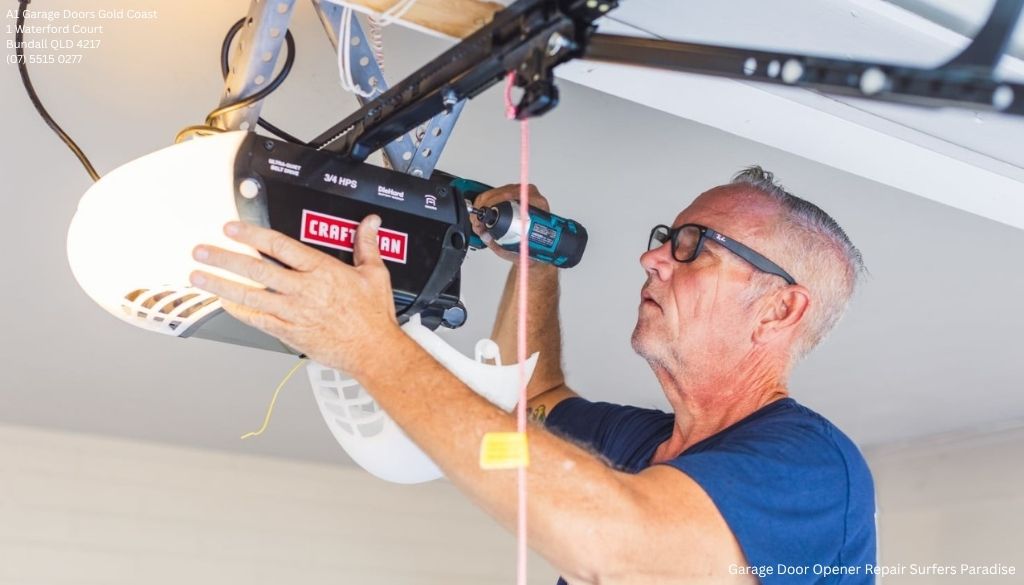
That is where a regular service schedule earns its keep. A yearly professional service, especially in a coastal area, gives someone a chance to inspect the moving system before a minor issue becomes a breakdown. It can also help extend the life of the door and motor, which is a practical benefit, not just a theoretical one.
The value of annual servicing is not that it prevents every future problem. No service plan can promise that. The value is that it reduces the chance of being surprised by a preventable failure, and it improves the odds that the system will keep operating smoothly in a harsher local climate.
For households that use the garage as the primary daily entrance, that reliability matters even more. A front door can stick for a day and be annoying. A garage door that will not close securely can interrupt work, school runs, storage access, and home security all at once.
Sensible boundaries for do-it-yourself work
Homeowners understandably want to handle what they can themselves. There is nothing wrong with paying attention to how the door sounds, how it moves, and whether it seems to be changing over time. Noticing those patterns early is useful.
The line should be drawn well before anything involving spring adjustment or repair. Springs are dangerous under tension, and that risk is not a matter of confidence or general handiness. It is a matter of training and proper tools. If a spring appears to have failed, or if the door suddenly feels heavy or unstable, that is a job for a professional.
The same principle applies when a door appears to have a deeper movement issue. If the system seems out of balance, the opener is straining, or the garage door alignment looks suspect, it is better to get a proper diagnosis than to keep cycling the door and hoping the issue clears itself.
A useful rule of thumb is simple: observation is reasonable, force is not. If the door starts resisting normal operation, pushing it harder, running the opener repeatedly, or trying to adjust dangerous components can turn a repairable problem into a larger one.
What experienced service providers tend to see in coastal areas
Garage-door companies in coastal regions do not just offer emergency callouts. Their everyday work tells the story. Repairs, servicing, installations, motor replacements, remote issues, spring replacement, and automation upgrades are all part of normal demand. That pattern reflects how much wear the environment can impose over time.
The job is not always dramatic. Sometimes the best outcome is that a yearly service catches something early enough that the owner never experiences a true breakdown. That kind of maintenance is easy to undervalue because it prevents a problem rather than producing a dramatic before-and-after story. But in practice, those quiet wins are what keep doors dependable.
A well-maintained garage door in a salty, humid climate can still perform reliably. The point is not that coastal living guarantees trouble. The point is that it narrows the margin for neglect. When the environment is tougher on hardware, small issues matter sooner, regular servicing matters more, and the difference between “good enough” and “properly maintained” becomes much more noticeable.
For homeowners, the takeaway is straightforward. If the door has begun sounding rough, moving unevenly, or not closing as cleanly as it once did, treat that as useful information. It may be time for a service, a targeted repair, or a closer look at the opener and overall door alignment. In coastal conditions, responding early is usually the smarter and less disruptive path.